FUN: “Customer Service”

Monday, May 24, 2010

FROM MY BORGATA FILE

Went for salads for lunch.

Amusing incident happened.

F said he’d buy the beer. He got hot stuff from the Japanese grill. We all got salads. (Ain’t I being dietetic? You’ll see when I am but a wisp of a boy. A figment of my former self.)

The guy at the Japanese grill told him that “no one sold beer in the food court”.

So F naturally believed him and bought what M calls “a fountain drink”.

A big one.

(Nice profit for the Japanese grill. Wonder if they have sales incentives for the shift? You’ll see why I ask that.)

Being a know-it-all, I went to the Philly Steak Sandwich place to confirm. Sure they still sold it.

Back at the table, F was annoyed. We razzed him about not wanting to pay for the beer.

I translated the “Japanese” for him: “I don’t sell beer and I don’t care what you want!”.

Everyone laughed.

ROFL!

ROFL?

OK, I guess you had to be there.

# # # # #


TECHNOLOGY: Diskless Booting; why not cdrom booting?

Monday, May 24, 2010

http://it.slashdot.org/story/10/05/08/0455244/Diskless-Booting-For-the-Modern-Age

Diskless Booting For the Modern Age on Saturday May 08, @05:08AM
Posted by timothy on Saturday May 08, @05:08AM
from the who-needs-moving-parts dept.

*** begin quote ***

An anonymous reader writes “Ever wonder what happened to PXE? Intel’s popular standard for diskless booting hasn’t been updated since 1999, and has missed out on such revolutions as wireless Ethernet, cloud computing, and iSCSI. An open source project called Etherboot has been trying to drag PXE into the 21st century. One of their programmers explains how to set up diskless booting for your cloud, using copy-on-write to save space.”

*** end quote ***

Having had to “clean” more than one machine — freinds, family, workmates, fellow alums, complete strangers (I love helping) — I have really never ever understood why we don’t boot from a CDROM.

Persistent virus infections, hiding in boot records, would be impossible.

Given that a reboot for desktops are relatively rare and for notebooks are infrequent, we could have true “change control”.

Never understood that?

Can you help me out and explain it?

# # # # #


FUN: Sunday night with Mom’s pic — undated wink

Sunday, May 23, 2010

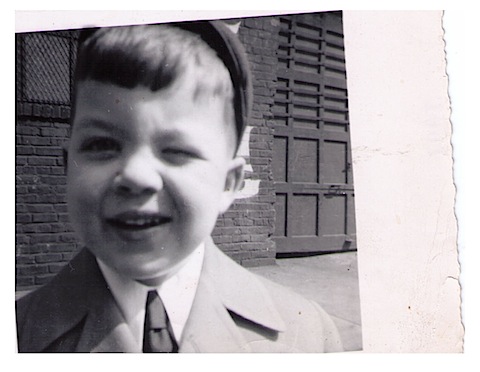
195X-XX-XX ME UNDATED

# # # # #


MONEY: What is it?

Sunday, May 23, 2010

Roy talked about money. “Money is a matter of functions four, a medium, a measure, a standard, a store.” He repeated that four times like poetry. “Six Characters in Money: Portable – Durable – Divisible – Uniformity – Limited Supply – Acceptability.” With a sentence about each, his passion came through. He ended with “The first golden coins in history were coined by Lydian king Croesus, around 560 BC.’Rich as Croesus’ survives to this day. It’s been all downhill since then.”

— CHURCH 10●19●62 Chaper 22 page 110 “Roy’s entertainment”

# – # – #

You asked me “What happened to the money?”

The answer is that “It’s complicated”.

Without being obnoxious, pedantic, or obtuse.

We have to establish a common vocabulary.

What is money?

Economists use “Robinson Crusoe Island” (There is a real island by that name.) as an imaginary place to perform mental experiments. It’s an isolated lab where we can set up and idealized society with limited players to illustrate a principle.

Populate the island with two castaways Tom and Dick. Tom fishes and Dick collects coconuts. Tom wants coconuts and Dick wants fish. Rather than kill each other, they barter directly. Eventually they decide that X fish is equivalent to Y coconuts. No need for money. And, all sorts of things happen. That we don’t need to study about savings and investing, Nets and climbing mechanisms.

Now introduce Harry. Harry collects potatos on the island. And, lets assume that there is a very strong union that prevents anybody but Tom from fishing and so on. How many fish are equal to how many potatos. Eventually that sorts out.

Now a raft drifts in and twenty people land. How are we going to do exchanges? Tom may want only one potato which is half a fish. So clearly we need a marketplace where everyone buys and sells. Eventually everyone finds bartering troublesome. Typically, the problem is Tom wants what Dick has, but Dick doesn’t want Tom’s fish. So Tom must find some one that has what Dick wants, trade for it, and return a trade with Dick. Very inefficient, time consuming, and ineffective.

Someone decides that seashells will be the medium of exchange. It’s beyond the scop of this how that decision happens. But eventually everything gets priced in seashells and you have money. Seashells are a problem because you can go to the beach and find them. An infinite supply. Sooner or later, there is genral agreement on somehting that is: Portable; Durable; Divisible; Uniform; Limited in Supply; and generally Acceptable. Let’s say it’s gold and silver coins. (Wampum, Cowery shells, the Great Stone Wheels, and the large totems have been money in strange places.) But eventually everyone used to settle on it.

So our market prices everything in gold and silver.

It’s: Portable – Durable – Divisible – Uniformity – Limited Supply – Acceptability. And it serves as: a medium of exchange, a measure of value, a standard of value, and a store of value.

OK so far. That goes from pre-history until the humans find paper or it’s equivalent.

Then gold smiths start acting like banks and issue receipts. Those receipts eventually turn into paper money.

Kings steal for the marketplace by adulterating the coins. Inflation!

(Go to the Smithsonian. See the Smithsonian exhibit of French Franc throughout history. From the hockey puck of gold from Louis 1 to the paper thin collar button of Louis XVII! It’s a visual of what every gooferment does with its power to define money for us.)

Fast forward to FDR in 1930 something. He takes the US off the gold standard for money. And, gives us Treasury Greenbacks, the eventually become Federal Reserve Banknotes. Redeemable in nothing.

Nixon in the Seventies completes the theft by closing the international gold window.

So now we have money that is NOT a standard of value, and a store of value. Ask anyone what is a dollar and you’ll get a blank stare.

So now you’re an expert in “money”. When the federal gooferment prints money, they can spend however they want.

The rub becomes return to Robinson Crusoe Island.

We have those people using seashells as money. And, Tom when fishing finds a lot more shells. He “spends” them in the market. Gets stuff for them. eventually prices rise to recognize the new amount of money in circulation. (Inflation!)

Producing more money doesn’t produce more goods. Wealth! The number of coconuts that Dick gathers is relatively fixed. Printing more money doesn’t produce more coconuts. It just makes them more expensive.

Now, you have to figure in savings and investment. Tom could stop fishing for a week and make a net. There has to be fish and coconuts for him to live on until the net allows him to catch more fish. There MUST be savings (delayed consumption) before there can be investment (Tom’s ability to make a new net.)

See the problem is that savings must delay consumption. When the gooferment counterfeits the money, some where some how some one must defer consumption to allow investment. All the money tricks in the world over all of man’s history can’t conceal that fact. Some one has to feed Tom while he makes that net.

The gooferment can print all the money it wants, but it can’t create wealth (i.e., food for Tom).

Right now the poor Chinese are “saving” and everyone is consuming.

What happens when the “poor” Chinese want to spend their savings?

When the money was gold, and it was relatively fixed, the gooferment had to tax or borrow, to spend. Now it can “inflate” (i.e., monetize the debt).

But it still can’t produce wealth for Tom to eat while he creates a new net.

It humorous to hear the politicians talk about “investment”! They are spending.

There is no “wealth” to allow them to spend.

The gooferment is bankrupt.

Robbed by the takers of all ilk.

All because we have forgotten what money is!

“The trouble with socialism is that you eventually run out of other people’s money.”
–Margaret Thatcher

# # # # #

We’ve run out.

And it won’t be until the American people wise up that the merry-go-round will stop. But it will stop!

# # # # #


QUOTE: “Do every act of your life as if it were your last.” ~Marcus Aurelius

Sunday, May 23, 2010

“Do every act of your life as if it were your last.” ~Marcus Aurelius

# # # # #


POLITICAL: Avoiding a long period of economic stagnation

Saturday, May 22, 2010

http://channel-surfing.blogspot.com/2010/05/stagnation-ahead.html

Thursday, May 20, 2010
Stagnation ahead?

*** begin quote ***

Paul Krugman’s column, which is on the Times site tonight, but will be in print tomorrow, reminds us that the danger is not the deficit — not in the short term, anyway — but the likelihood that we are entering a long period of economic stagnation, a “lost decade,” and that we are not doing enough to prevent it.

*** end quote ***

Remember the Great Depression was caused by the Gooferment and it’s Smoot Hawley tariff.

This one was caused by CRA, Freddie + Fannie, repeal of Glass Stegal, the FED, the SEC, the FDIC, and the FTC. (imho in that order) (p.s., blaming Wall Street is like blaming the insane in the asylum. Corrupt gooferment makes this all possible.)

The answer is freedom; not gooferment. How’s all that deficit spending worked out for Japan? How did socialism work out for the old Soviet Union. Remember Thatcher’s quote on “other people’s money”?

No, we pull ourselves back from the brink by tough love. Sure it’s going to hurt. But, do we have the right to endebt future generations?

imho, we need a national CPR, fast comprehensive and violent:

(1) End the various “wars”. Bring all the boys and girls home.

(2) End the psuedo War on (some) drugs. Pardon ALL non-violent drug offenders.

(3) End all restrictions on small businesses. (License to braid or cut hair’ please don’t make me barf!) (Dollar van prohibitions.)

(4) Zero corporate, estate, and income tax. Return to constitutional tariffs and excise taxes.

(5) Start selling off the “national assets”.

(6) Return — with a forty year plan — education costs to the parents.

(7) End welfare — corporate and personal — with an appropriate transition period.

(8) End the Social Security ponzi scheme [Really a misnomer. It’s Ponzi like. Those defrauded really had no choice about participating.] with a Chile-like solution to give folks time to adapt.

(9) Open the borders with an expedited identification scheme. (i.e., here illegally? come down and get your picture taken and finger prints checked and dna sample! Here’s your new green card.) (i.e., want to come here. post a bond for your return trip. no communicable diseases. pic, finger, dna. welcome to the land of opportunity.)

(10) Re-institute Constitutional money in gold and silver. Figure out a transition plan from FED to gold.

Then stand back and watch this economy take off. You’ll have growth and civility that is unprecedented.

# # # # #


GOVEROTRAGEOUS: Generals get special treatment

Saturday, May 22, 2010

http://formerspook.blogspot.com/2010/05/different-spanks-for-different-ranks.html

Saturday, May 15, 2010
Different Spanks for Different Ranks

*** begin quote ***

But that sanction is far less severe than the punishment imposed on enlisted personnel and lower-ranking officers. Enlisted members would almost certainly face an Article 15 (non-judicial punishment), resulting in the loss of a stripe, forfeiture of a portion of their pay for several months, and the eventual end of their military careers. Officers would also receive an Article 15, with an accompanying fine and possible separation from the service. Offenders in both groups would also lose access to classified information and face an uphill fight in restoring their clearances.

*** end quote ***

As an ex USAF nco, I know that this is unexplainable. Other RHIP!

As a little L libertarian, I’m not big on DUI laws. Unless there is injury and / or property damage, then a trial and throw the book at people.

For all the gooferment’s ranting and raving, it’s generally conceded that the damage USUALLY comes from repeat offenders and that the sanctions don’t keep drunks off the road.

(1) Repeat offenders (i.e., with a prior DUI conviction or even an arrest or warning) get a mandatory jail term. It’s too dangerous to let them out on the road. First offense earns a year; second, a decade; third two decades. This non-sense of ten convictions is a joke.

(2) We need to reform the DUI laws in two ways: If no injury or damage, then a warning with teeth (i.e., you’ve been warned and should you case injury or damage, then those counts as your first offense.)

None of this Blood Alcohol Levels in random stops. It’s not about making money for the gooferment; it’s about really protecting the public.

(3) And generals shouldn’t get any consideration. What the enlisted and junior officers get is what the should get. Perhaps with an adder. There is nothing that kills an organization more than hypocrisy!

imho

# # # # #


RANT: Another sleepless night

Saturday, May 22, 2010

I hear a bird chirping outside my window.

I look up from the one eyed monster bright with pitcures and words.

I see the curtain lightening up.

And realize that I have spend another night — sleepless!

Argh!

# # # # #


MONEY: Lessons from the Baby Boomer’s Blunders

Friday, May 21, 2010

http://www.getrichslowly.org/blog/2010/05/21/what-you-can-learn-from-baby-boomer-blunders/

What YOU Can Learn from Baby-Boomer Blunders   

Neal Frankle, a Certified Financial Planner, and the author of Wealth Pilgrim, a blog about his financial journey.

*** begin quote ***

# Don’t assume your home is going to fund your retirement.

# Try like hell to pay off your mortgage by the time you’re 55.

# Don’t send your kids to schools you can’t afford.

# Think about saving as any other expense.

*** end quote ***

I’d add some other “lessons”.

  • Don’t assume that you’ll be working after fifty. Or, don’t assume, unless your work for the Gooferment, that your pay will keep going up. One thing I have learned form my turkeys is that (a) there is a good possibility of a year out of work, living off your savings, dipping into your retirement money, and settling for a lot less.
  • Don’t assume that your “blue chip company” will even exist in the next year. Look at Lehman Brothers for a quick demise. Look at GM for a slow death. You are the master of your own fate. If the Titanic is going down, even if you’re not one it, it can take you with it. Look at the city of Detroit. Look at all the suppliers and correspondents of Lehman Brothers. Heck, my CPA took a batch with Lehman Brother’s bonds; a supposedly safe investment.
  • Don’t assume that your “gold watch” company will take care of you. Your “benefits” are very expensive. I’d suggest that, if possible, you have your own health insurance. Again, from my turkeys, loss of the benefits are a financial disaster. It can break a marriage. It can break your spirits.

You have to have a strategy, with the tactics to match.

I alwasy fall back to what I think is the “success” meme in today’s climate:

Success for your generation is: (1) ruthless financial discipline — no bad debt; (2) a life long interest in learning — education — a degree — they can’t take it away from you; (3) a NON-OFFSHORABLE white collar job in order to save big bux; (4) a blue collar skill for hard times — never saw a poor plumber; (5) one or more internet based businesses — your store is always open; (6) a free time hobby that generates income; and (7) a large will-maintained network of people who can “help” you.

FWIW

# # # # #


RANTING: Does America really have “poor”?

Friday, May 21, 2010

http://www.wnd.com/index.php?fa=PAGE.view&pageId=152409

Are free markets good for the poor?
Posted: May 12, 2010
Walter E. Williams
Professor of Economics at George Mason University

*** begin quote ***

The market is a friend in another unappreciated way. In poor black neighborhoods, one might see some nice clothing, some nice food, some nice cars but no nice schools. Why not at least some nice schools? Clothing, food and cars are distributed by the market mechanism, while schools are distributed by the political mechanism.

*** end quote ***

When Professor Williams writes, he usually nails it. Hits the mark here too.

A free marketplace is like an election of sorts. People vote with their “certificates of appreciation”.

It harnesses greed and enforces cooperation.

Trade makes everyone happy. Even if you can’t afford something, you get a motivating goal.

And, no force required.

It recognize and channels human nature into solving problems.

Sigh, it’s great for the poor.

Look at the “poor” here versus elsewhere. Seems to really put things in stark contrast.

# # # # #